



By Trevor Basner, Staff Writer
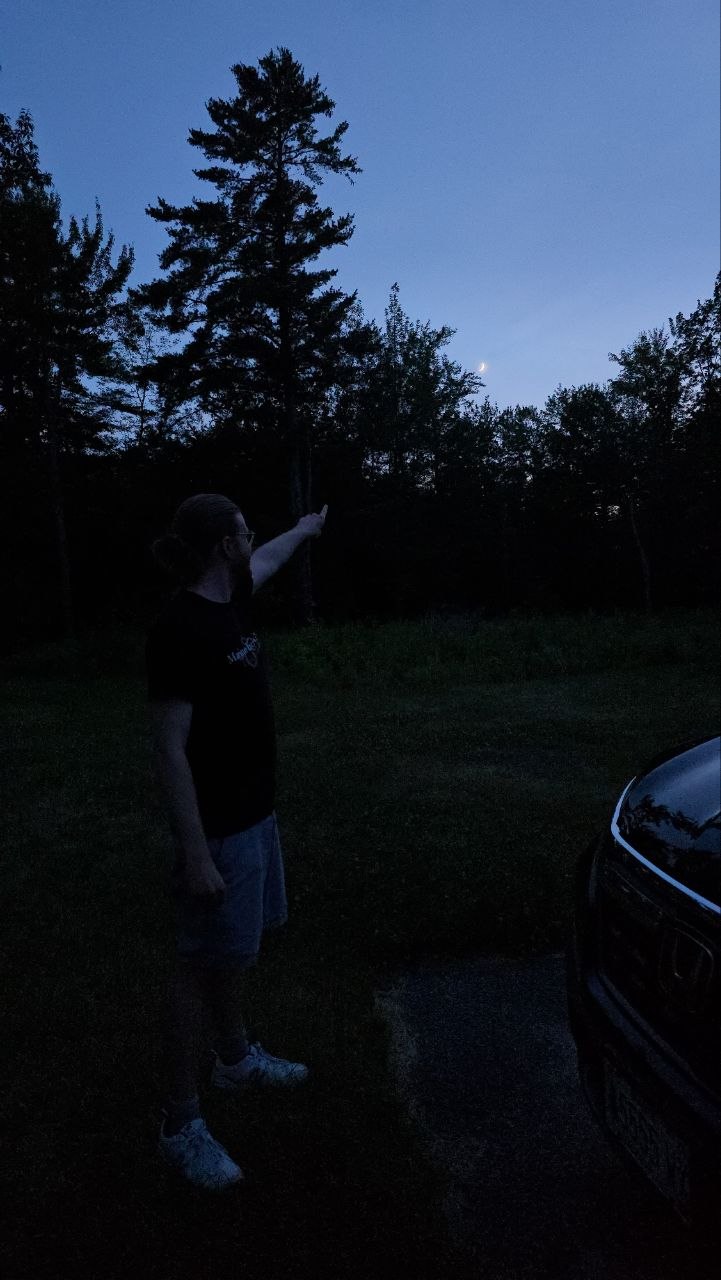 Gorham resident Trevor Basner points out the pair. (Photo credit: Esprit Basner)
On July 17, look to the sky above Gorham for a beautiful sight. The crescent moon will be joined by the bright shine of the planet Venus. The gleaming pair will appear close together in the sky–as close as three finger-widths. Astronomers call this near approach a conjunction.
Although the moon and Venus will seem to be separated by only a few inches, they are actually tens of millions of miles apart. A conjunction is an illusion of perspective. As the celestial bodies move through the solar system, sometimes they appear to occupy the same area of sky from our viewing point on Earth. This occurs because the solar system is a relatively flat disk. The Earth and the other planets orbit the sun, the moon orbits the Earth, and all of these orbits occur on a roughly similar plane. Because of this similarity, the moon, sun, and planets all seemingly travel along the same path through our sky as the Earth rotates each day. Astronomers call this imaginary line the ecliptic. On July 17, these cosmic motions will conspire to bring the thin crescent moon and luminous Venus to nearly adjacent positions from our perspective.
No equipment will be needed; the cosmic event will be plainly visible to the naked eye. For best viewing, look above the western horizon shortly after sunset. Don’t wait too long though: they will dip below the horizon approximately two hours after sunset. After that, the moon will continue its orbit around Earth and won’t appear as close to Venus the next night. But the moon’s orbit only takes about twenty-seven days, so it moves rapidly across Earth’s sky, making moon-planet conjunctions a nearly monthly phenomenon.
For more information about conjunctions, check out https://www.planetary.org/articles/what-is-a-planetary-conjunction.
If you are reading this after July 17, here are some photos from the astronomical event.
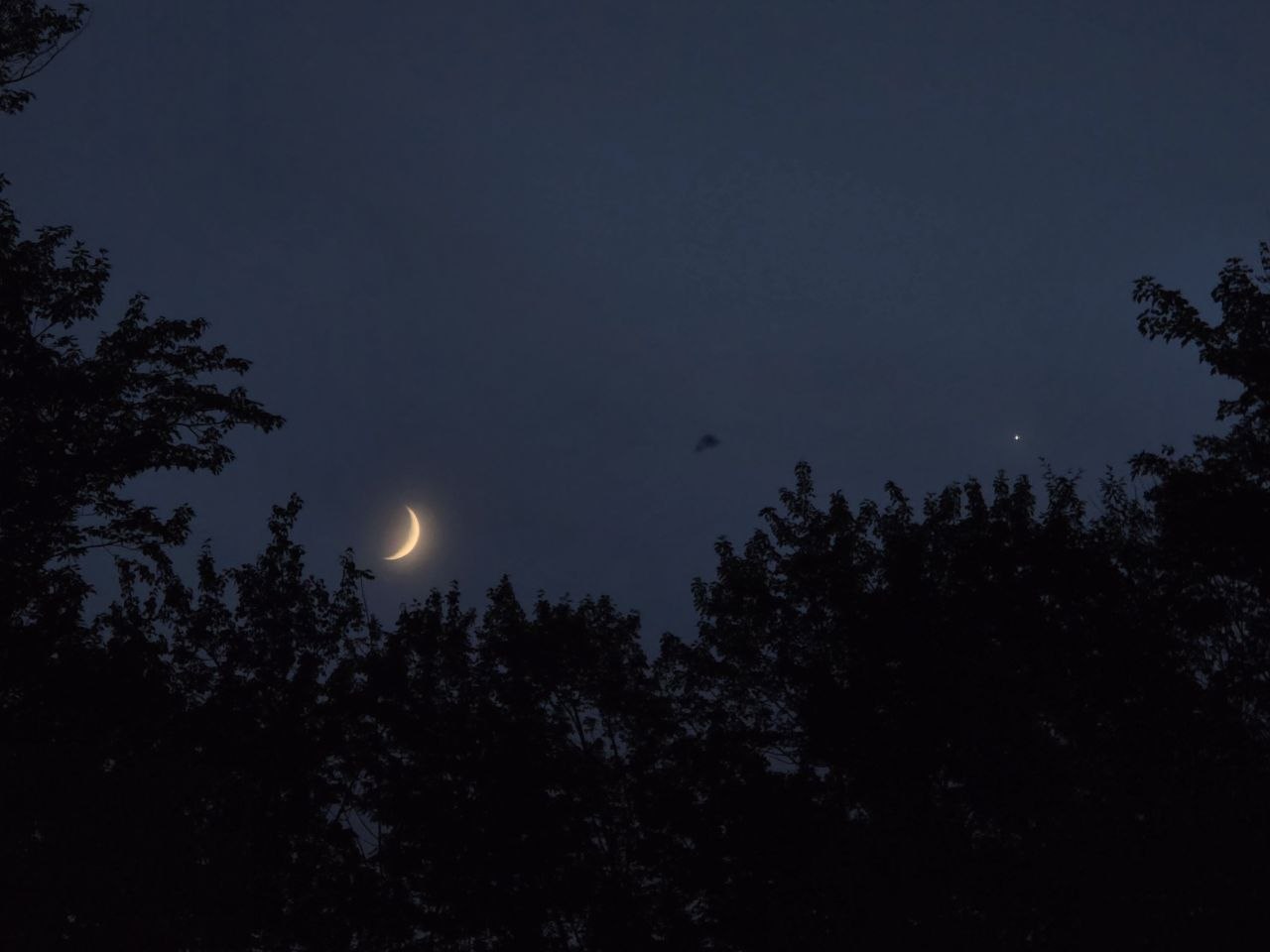 The conjunction photo-bombed by a bat. (Photo credit: Trevor Basner)
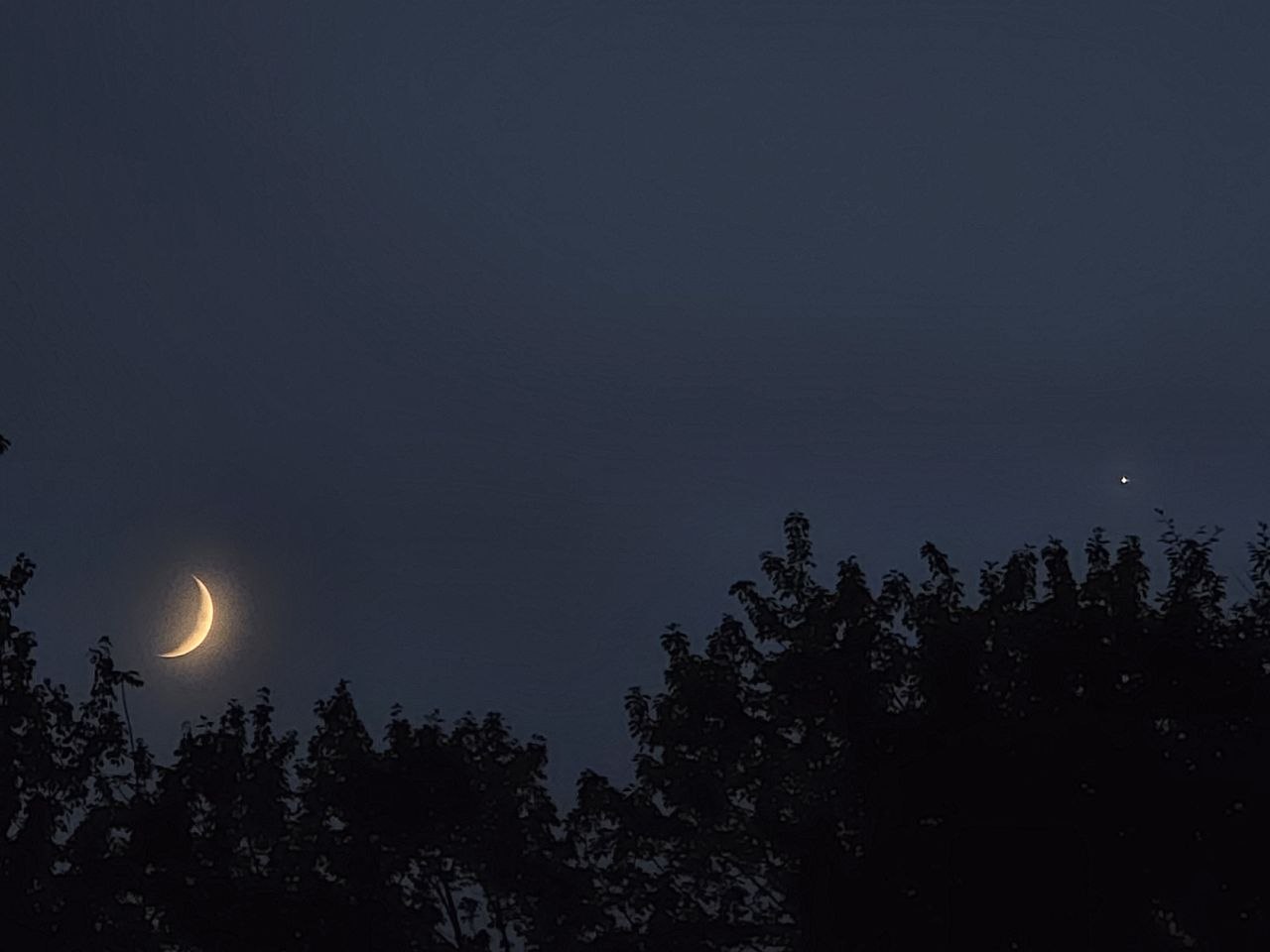 Close up of the moon. (Photo credit: Trevor Basner)